The logistics and transportation sector faces stricter regulations every year in the fight against global warming and environmental pollution. Specifically designed to reduce the carbon footprint left by heavy duty vehicles that travel hundreds of thousands of kilometers, the norms introduced by the European Union dictate the development direction of the industry. So, what exactly is Euro 3, which is considered a true turning point in automotive history and logistics?
Understanding the logic behind emission standards is critical to protecting your heavy duty vehicle's engine life, ensuring compliance with legal regulations, and choosing the right truck spare parts. In this guide prepared with technical data by the engineers of Klötze Technic, the leading manufacturer in the industry, we examine the details of the Euro 3 norm, the innovations it brings, and its impact on the mechanical world with full transparency.
Euro 3 standards are not just a simple rule regarding the filtration of exhaust gases; they mark the era when diesel engines transitioned from mechanical infrastructure to Electronic Control Units (ECU)—essentially, the moment engines became smart. This standard has brought technical limits that directly endanger engine health when the correct engine parts and high-quality filter systems are not used.
Euro 3 is a legal standard adopted by the European Union for passenger cars and heavy duty vehicles, establishing exhaust gas emission limits. It became mandatory for heavy duty vehicles (trucks, semi-trucks, buses) in October 2000. Its fundamental goal is to radically reduce the ratio of harmful gases and particulate matter emitted from the exhaust.
With the Euro 3 standard, emission limits for carbon monoxide (CO), nitrogen oxides (NOx), hydrocarbons (HC), and particulate matter (PM) were significantly lowered compared to the previous Euro 2 norm. Strict restrictions were applied, especially on particulate matter rates, which cause soot and black smoke in diesel engines.
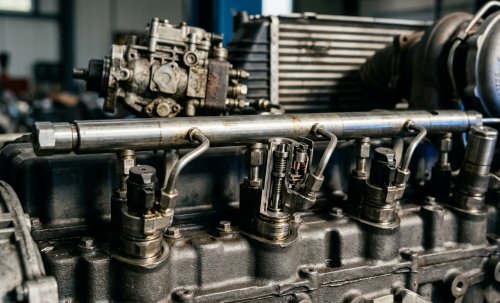
Meeting Euro 3 threshold values was impossible with old-generation mechanical fuel pumps. This norm led to the widespread adoption of electronically controlled injector and pump systems (Unit Injector / Common Rail), which allow fuel to be sprayed into the cylinders at much higher pressures and with millisecond precision.
Sending air into the cylinders more densely to ensure complete fuel combustion became an indispensable part of Euro 3. During this period, modern turbocharger structures were integrated with intercooler (air cooler) systems, aiming to operate the engine with more clean oxygen and reduce emissions.
To reduce nitrogen oxide (NOx) gases, EGR valves began to be actively used in Euro 3 engines. By cooling a portion of the exhaust gas and sending it back to the intake manifold, this system lowers the temperature in the combustion chamber and prevents harmful gas emissions. The healthy operation of the EGR depends on high-quality air and fuel filters.
The sensitive electronic injectors of Euro 3 engines are highly vulnerable to dirty, low-quality, or high-sulfur fuels. Using poor-quality fuel impairs emission values, clogs injector nozzles, and opens the door to serious engine failures.
Oxidation catalysts, which convert harmful gases into harmless water vapor and carbon dioxide through chemical reactions in heavy duty vehicle exhaust lines, became standard during this period. Euro 3 made it mandatory for the exhaust line to involve just as much engineering as the inside of the engine.
Thanks to electronic management, every drop of fuel is calculated and burned down to the millimeter. Compared to older generation engines (Euro 0, 1, 2), Euro 3 engines offer a much more optimized fuel consumption curve under load, lowering the operating costs of fleets.
To monitor emission control, air flow, manifold pressure, and temperature sensors began to be frequently used on Euro 3 engines. The data sent by these sensors ensures that the engine constantly operates at the most ideal balance of emissions and performance.
While today's valid Euro 6 standards mandate complex systems like AdBlue (SCR) and DPF (Diesel Particulate Filter), Euro 3 has a leaner structure with high mechanical durability. Although Euro 3 vehicles are subject to high taxes at border crossings today, they still present a long-lasting alternative with proper maintenance, especially in local transportation.
In all Euro 3 and subsequent engines, part tolerances are at the micron level. When non-standard, aftermarket filters or mechanical parts are used, the combustion stability of the engine is disrupted. The vehicle directly exceeds Euro 3 limits, starts emitting black smoke, and engine components wear out excessively. Therefore, regardless of the emission standard, original quality spare parts should always be preferred.
❓ Is AdBlue fluid added to a Euro 3 engine?
No, there is no AdBlue (SCR) system in Euro 3 engine technology. AdBlue usage entered our lives with Euro 4 and especially Euro 5/Euro 6 standards in heavy duty vehicles. Euro 3 vehicles control emissions directly through in-engine combustion technology and EGR.
❓ Can Euro 3 trucks and semi-trucks enter city centers or Europe?
"Low Emission Zones" (LEZ) are implemented in many European countries and major metropolitan areas. The entry of Euro 3 vehicles into these zones is generally prohibited or subject to very high environmental taxes/fines. For this reason, Euro 6 vehicles are preferred in international logistics.
❓ What maintenance should be considered to reduce emissions in Euro 3 vehicles?
Periodic calibration of injectors, cleaning of the EGR valve, healthy operation of the turbocharger, and most importantly, timely replacement of air and fuel filters are of vital importance to keep emission levels within legal limits.
We export our premium truck spare part products, manufactured in accordance with world standards in our high-tech production facilities in Turkey, directly to global markets through our global logistics network and competitive factory prices.
Contact for Wholesale Purchase and Partnership