

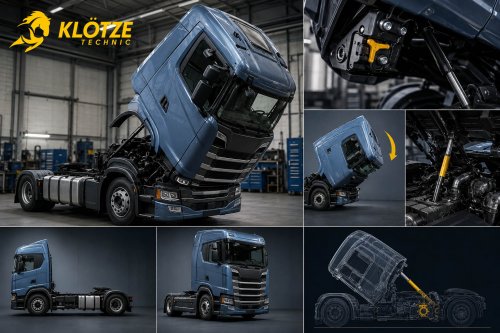
For heavy-duty commercial vehicles, safely tilting the cabin to perform periodic maintenance or engine repairs is a vital operational step. Especially in European-manufactured trucks like Scania, Volvo, Mercedes-Benz, MAN, DAF, Iveco, and Renault, the cabin tilt system operates under high hydraulic pressure and mechanical stress. Therefore, these systems require precise handling and zero neglect.
In this guide, we will analyze the working principles of cabin tilt systems, identify the most common failure symptoms, and highlight critical maintenance steps to extend your system's operating life.
Flawless operation depends on the precise harmony between hydraulic and mechanical parts. For a safe tilting process, each of the following components must be in top condition:
Cabin Tilt Cylinder: The high-pressure hydraulic piston that physically lifts and lowers the cabin structure.
Cabin Tilt Pump: The mechanism that pumps hydraulic fluid into the system, operated either manually (via a lever) or powered by an electric motor.
Cabin Latch/Lock Mechanism: Safety-first hydraulic or mechanical locks that ensure the cabin remains securely locked to the chassis during travel.
Hydraulic Hoses and Fittings: Flexible high-bar lines that transport hydraulic oil under extreme pressure between the pump and the cylinder.
A failure in this system does more than just disrupt your maintenance schedule; it poses severe workplace safety risks. Here are the most frequent warning signs:
If the cabin does not rise despite pumping the lever (or pressing the electric button), the system likely suffers from low hydraulic fluid or trapped air. Additionally, worn-out internal valves inside the pump can cause significant pressure loss.
If the cabin cannot maintain its raised hydraulic position and slowly drifts downward, it indicates that the internal seals of the cabin tilt cylinder are worn out. Oil bypasses the piston head, leading to a steady drop in pressure.
Visible oil stains or wetness on the cylinder shafts, pump body, or hose connections are clear indicators that components are nearing the end of their service life. In harsh highway or construction site conditions, road dust sticks to this leaking oil, accelerating the abrasive wear on mechanical parts.
To minimize unplanned downtime and maximize safety for your European fleet, consistently apply these periodic maintenance steps:
Always use high-viscosity, anti-freezing hydraulic fluids that comply strictly with the manufacturer’s specifications (e.g., Scania standards). Regularly check the oil level; any fluid that appears darkened, contaminated with water, or muddy must be flushed and replaced immediately.
Even when the cabin is locked down, parts of the cylinder rod remain exposed to road grime, salt, and environmental chemicals. Wiping the rod clean with a lint-free cloth before tilting prevents abrasive debris from scratching the internal seals and causing premature cylinder failure.
Visually inspect high-pressure lines for cracking, swelling, or signs of friction wear. Replacing worn-out hydraulic hoses is critical, as a hose burst while the cabin is fully tilted presents an extreme safety hazard.
Ground Leveling: Before initiating the tilt, ensure the truck is parked on flat, solid ground. On sloped surfaces, the cabin's center of gravity shifts, exerting dangerous lateral force on the cylinder.
Secure the Interior: Remove or secure all loose, heavy objects inside the cab (such as portable fridges, toolboxes, or loose bottles) before tilting. Otherwise, they will slide forward, potentially shattering the windshield.
Utilize Safety Latches: Never step underneath the cabin until you have verified that the hydraulic lock or mechanical safety pin is fully engaged at maximum tilt.
In high-tonnage vehicles like Scania, Volvo, or MAN, the cabin tilt system directly impacts human life and vehicle security. Choosing sub-standard cylinders with poor sealing capabilities or low-quality pumps results in rapid pressure loss and expensive secondary damages.
Relying on reliable, precision-tested spare parts engineered to European standards ensures your fleet remains safe and operational. To find high-performance cabin tilt components and comprehensive global supply solutions tailored to your business needs, feel free to explore our professional product catalogs.


