

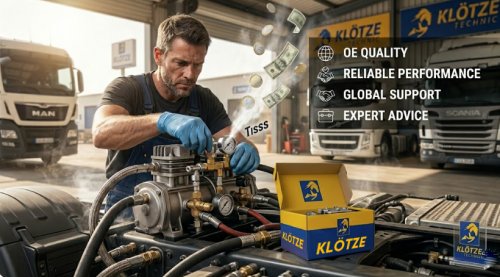
As heavy-duty vehicle service experts, one of the most common yet most overlooked problems we encounter is air leaks. That faint "hissing" sound you hear when you park the truck might seem like a simple mechanical flaw. However, through the eyes of a service professional, that sound means your engine is working overtime, parts are wearing out prematurely, and most importantly, thousands of dollars in fuel are vanishing into thin air.
So, how can a simple air leak in the pneumatic braking system so dramatically increase the fuel consumption of a massive truck? Let's examine the mechanics of this hidden cost and the solutions.
Your truck's air compressor draws its power directly from the engine (usually via the crankshaft or gear train). The working principle of this system is quite simple, but the cost calculation is ruthless:
Parasitic Load: The compressor steals horsepower from the engine until it fills the air tanks to the 10-12 bar level. Once the system is full, the unloader valve opens, the compressor "unloads" (idles), and the load on the engine is lifted.
The Vicious Cycle: If there is an air leak in the system (in the valves, air springs, or fittings), the system pressure constantly drops.
Continuous Operation: Because the pressure drops, the compressor can never unload and rest. To reach the desired pressure, it is forced to work continuously throughout the journey, meaning it constantly draws power from the engine.
A compressor that remains constantly engaged causes the engine to inject extra fuel for every mile driven. In short, while you are cruising down the road, your engine isn't just pulling the load; it's also expending extra effort to compensate for that air leaking into the atmosphere.
A continuously running air compressor increases the vehicle's overall fuel consumption by an average of 1% to 2%. This percentage might look small at first glance, but when we look at the math over the long term, the picture changes:
A tractor-trailer driving 120,000 km a year consumes an average of 30-35 liters of fuel per 100 km.
Just a 1.5% increase in consumption means roughly 540 to 630 liters of extra fuel per year, per vehicle.
If you have 10 vehicles in your fleet, it means thousands of dollars are being thrown in the trash every year simply because of a "small air leak."
Add to this the repair costs of a compressor that overheats, suffers from oil carbonization, and has its lifespan cut in half due to running constantly, and the size of the bill becomes much more frightening.
Over time, weak links form in the system due to vibration, extreme heat, and the use of low-quality parts. When we pull a truck into the service pit, the first points we check are:
Fittings and Hoses: These are the parts of the installation most exposed to vibration.
4-Way Protection Valve: The internal sealing elements (O-rings) in this valve, where the air in the system is distributed to different circuits, harden and leak over time.
Air Suspension Bellows (Air Springs): Invisible hairline cracks turn into major leaks during driving.
Air Dryer and Unloader Valve: Clogged or improperly closing unloader valves cause air to be continuously expelled.
Fuel economy isn't just achieved by shifting gears at the right RPM or installing aerodynamic deflectors; a healthy pneumatic system is the hidden hero of fuel efficiency.
Check your vehicles' pressure levels in the morning before starting them. If the air tanks completely drain overnight, you have a leak in your system that needs intervention. Instead of using temporary repair kits during maintenance, using reliable spare parts manufactured to OEM quality standards is the most profitable investment in the long run.
During pneumatic system overhauls, by choosing premium quality, Klötze Technic approved valves, fittings, and compressor parts, you can prevent air leaks and put an end to fuel waste. Remember; a leak-free system is money kept in your pocket.


